- News
Xu Xun: A Doctor Devoted to Protecting Vision in China—from Diabetic Retinopathy Screening to Myopia Prevention
Source: https://mp.weixin.qq.com/s/kiPGdkUa9PAPFHD2u0w5-A
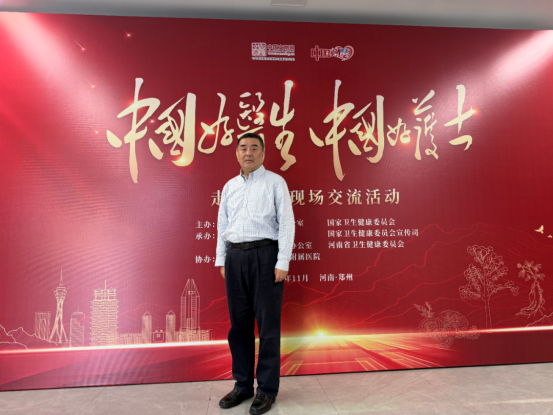
On November 20, Professor Xu Xun, Director of the National Clinical Research Center for Eye Diseases and Academic Leader of the Ophthalmology Clinical Medical Center at Shanghai General Hospital, participated as a representative of the “China’s Good Doctors” initiative in the China’s Good Doctors and Good Nurses: A Visit to Henan exchange event. He shared his insights and achievements in three major areas: myopia prevention and control, diabetic retinopathy screening, and ophthalmic drug development.

Pioneering Diabetic Retinopathy Screening with Remarkable Results
Diabetic retinopathy (DR) has become the leading cause of blindness among retinal diseases in China, threatening the vision of approximately 30 million patients. Data show that the risk of DR increases with the duration of diabetes: among patients with diabetes for more than 15 years, the prevalence approaches 85%, and among those with a disease duration exceeding 20 years, it is nearly 100%.
Xu Xun was among the second cohort of university students admitted after China reinstated its national college entrance examination in 1978. He enrolled at Shanghai No.1 Medical College, now Fudan University Shanghai Medical College, where he developed a strong interest in ophthalmology, a specialty requiring exceptional precision. After graduation, he joined the Department of Ophthalmology at Shanghai General Hospital, where years of clinical practice and continuous learning helped him grow into an accomplished ophthalmologist.
Xu became one of the early ophthalmologists in China to focus on diabetic retinopathy, prompted by a memorable clinical encounter.
“One patient and several members of his family had type 2 diabetes and diabetic retinopathy. In a family of seven or eight, three or four members had lost their sight. I gradually realized that China was entering an era of rapidly rising diabetes prevalence, and that the prevention and treatment of diabetic retinopathy would become a major challenge for the country’s retinal disease care in the years ahead.”
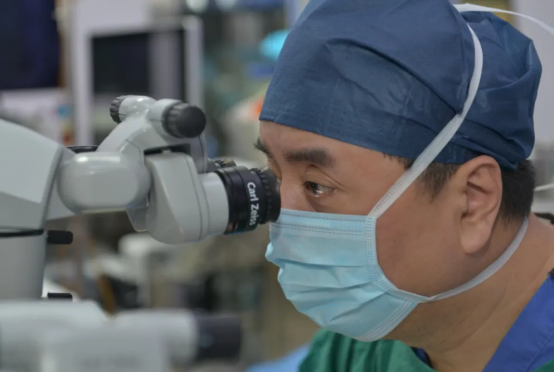
Xu further recognized that type 2 diabetes often develops insidiously. By the time retinal complications are detected, many patients have already missed the optimal window for intervention.
In response, Xu and his team spent a decade systematically collecting and documenting comprehensive clinical data from large numbers of patients with diabetic retinopathy. Based on these data, they developed prevention and treatment guidelines tailored to China’s clinical context, advocating an integrated approach that combines prevention with treatment and extends care into community settings.
Their research project, Pathogenesis, Clinical Prevention and Treatment of Diabetic Retinopathy, received the First Prize of Shanghai Science and Technology Progress Award and the Second Prize of National Science and Technology Progress Award.
“Diabetic retinopathy is recognized by both China’s National Health Commission and the World Health Organization as a form of preventable blindness. With screening, early detection, and timely intervention, vision loss can be prevented before it occurs,” Xu said.
In addition, Xu worked closely with Professor Zou Haidong, Vice President of Shanghai General Hospital and Director of the Shanghai Eye Disease Prevention and Treatment Center, to establish China’s first telemedicine-based diabetic retinopathy screening system. Their pilot program introduced a model in which retinal images are captured at primary care facilities and interpreted centrally by specialists at higher-level hospitals. This approach increased the screening rate from 64.2% under the traditional hospital-based model to 96.82%.
Building on this system, Shanghai established a regional network for diabetic retinopathy prevention and treatment covering 57 community health centers and 12 district-level hospitals. Through integrated prevention and management, the rate of blindness among patients with diabetes decreased by 54.1%. The model subsequently served as a reference and framework for nationwide diabetic retinopathy blindness-prevention initiatives led by China’s former Ministry of Health. Since 2009, it has been promoted across 16 provinces, municipalities, and autonomous regions, helping reduce vision impairment and blindness caused by diabetic retinopathy.
“Henan is a populous province experiencing rapid socioeconomic development. With the support and guidance of health authorities and relevant programs, diabetic retinopathy screening and referral initiatives will continue to expand across China, including Henan, benefiting more patients with eye diseases,” Xu said during the event.

Tireless Commitment to Myopia Prevention
The persistently high prevalence of myopia among children and adolescents in China has become one of the country’s major public health challenges affecting young people.
“Myopia is irreversible. Although laser refractive surgery can correct refractive errors, it cannot reverse the underlying structural damage associated with myopia, such as retinal thinning, axial elongation, and changes in the internal structures of the eye,” Xu explained.
He has observed that high myopia is increasingly developing at younger ages in China.
High myopia in adults is generally defined as a refractive error of −6.00 diopters or greater in magnitude. “One of our studies showed that two-thirds of highly myopic patients over the age of 55 develop retinal complications, including macular hemorrhage, retinal detachment, retinal atrophy, and retinal tears. In severe cases, these conditions can even lead to blindness. In cities such as Beijing and Shanghai, complications associated with high myopia have become the leading cause of blindness among adults, surpassing cataracts,” Xu noted.
He believes that eye disease prevention cannot focus solely on treatment after disease onset. Efforts must extend further upstream to early prevention and intervention to effectively reduce the risk of vision-threatening complications.
The optimal window for myopia prevention and control is before the age of 18. Yet the situation remains concerning: data indicate that the prevalence of myopia among high school students has reached approximately 90%, with 20% having high myopia.
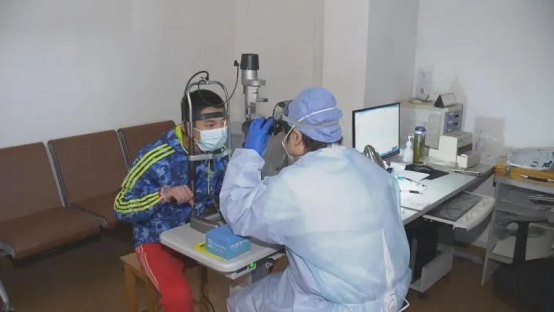
In recent years, Xu has extended his clinical and public health efforts toward earlier intervention, spearheading the development of a comprehensive system for early myopia screening and prevention and bringing preventive services closer to communities. Drawing on the success of diabetic retinopathy prevention, he and his team have adapted similar strategies to tackle myopia in children and adolescents.
“We still do not fully understand many of the mechanisms underlying myopia. There are numerous unanswered questions that warrant further investigation. China has the most prominent myopia burden in the world, and we cannot rely on researchers from other countries to solve our own problems. Ophthalmologists in China must actively contribute to this effort,” he said.
During the exchange event, Xu introduced several major achievements by his team. They pioneered a screening approach combining unaided visual acuity testing with non-cycloplegic refraction, led the development of national health industry standards, and promoted the approach across 32 provincial-level regions nationwide, screening more than 100 million people annually.
Their research established a threshold of 15 minutes for a single outdoor activity session to achieve measurable preventive benefits, contributing to the Ministry of Education’s initiative to extend school recess to 15 minutes. The team also proposed safety thresholds for axial elongation, led the development of national standards for hyperopia reserve and consensus recommendations on the use of axial length in myopia management, helping shift prevention toward earlier stages.
In addition, the team has conducted systematic evidence-based research on interventions such as defocus spectacles and low-dose atropine. Their findings have been cited in 12 international guidelines, and related technologies have been promoted by the WHO and international blindness-prevention organizations.
Advancing Chinese Solutions for Eye Disease Prevention and Treatment
Visitors to the Ophthalmology Building at Shanghai General Hospital can immediately notice its newly upgraded clinical environment. Modernity and technological innovation are reflected not only in the facilities, but also in the department’s research and innovation capabilities, which have made it a hub for developing and applying new technologies and therapies.
In 1946, Professor Zhao Dongsheng, renowned as the “Eye of the Orient,” founded the Department of Ophthalmology at Shanghai General Hospital, establishing it as one of the pioneering institutions in retinal surgery in China. Since the 1990s, the department has been recognized as a leading specialty in Shanghai. Xu developed his expertise here and has devoted his knowledge, experience, and passion to advancing ophthalmology at the hospital.
In 2019, Shanghai General Hospital was designated as the National Clinical Research Center for Eye Diseases, becoming one of China’s largest integrated centers combining medical care, education, research, and disease prevention in ophthalmology. As director of the center, Xu has continued to advance clinical research while exploring new models of care. In 2024, Shanghai General Hospital established Shanghai’s first integrated inpatient ward for diabetic eye disease, jointly managed by ophthalmologists and endocrinologists. This collaborative model provides one-stop care for patients with complex diabetic eye conditions, helping overcome delays and fragmentation in the patient care pathway.
“Moving from single-specialty care to multidisciplinary collaboration is not only an inevitable trend, but also a necessary step toward earlier intervention and reducing missed screening opportunities and patient loss to follow-up,” Xu said.
Xu believes that China has reached the forefront of retinal disease research and prevention globally. However, many existing clinical guidelines and standards do not adequately account for the characteristics of Chinese or broader Asian populations. China therefore has both the need and the capacity to establish its own evaluation standards.
To address this, Xu and his team established China’s first independently developed clinical evaluation platform for retinal disease drugs, equipped with proprietary intellectual property. The platform enables China to independently conduct pre-market clinical evaluations of new retinal disease therapies, reducing reliance on overseas institutions and ensuring that clinical trial data for retinal disease drugs are systematically documented and retained within China.
“In earlier years, many innovative drugs used in clinical practice were imported and expensive, making them difficult to widely access. Clinical trial results often had to be evaluated overseas. As China’s healthcare system has developed, the need for domestically developed innovative drugs has become increasingly urgent,” Xu said.
The clinical trial evaluation center for ophthalmic drugs he established has successfully built an integrated drug development and evaluation pathway, supporting the development and assessment of new ophthalmic therapies in China while helping ensure that valuable biological samples and clinical research data generated in the country remain available for domestic scientific advancement.
The development of artificial intelligence (AI) is also creating new opportunities for large-scale retinal disease prevention. Xu’s team was among the earliest in China to use AI for diabetic retinopathy screening, and its experience has since been incorporated into large-scale retinal disease screening initiatives.
“While 93% of the public are aware of cataracts, awareness of retinal diseases remains below 20%. Many patients mistakenly attribute declining vision to cataracts and seek medical attention only after significant vision loss has occurred, by which time the optimal treatment window may have passed,” Xu explained. He emphasized that strengthening screening capabilities at the primary care level is critical, and AI offers a promising means of overcoming existing barriers.
In 2025, the Million-Person Retinal Disease Screening Initiative was officially launched, aiming to screen 10 million high-risk individuals for retinal diseases over the next five years. Xu and his team remain committed to working on the front lines of eye care, advancing scalable and replicable models for disease prevention and treatment, and exploring new solutions to improve eye health across China.